JAPAN - ON THE RAILS
Japan does not simply run trains. It has built an entire culture around them.
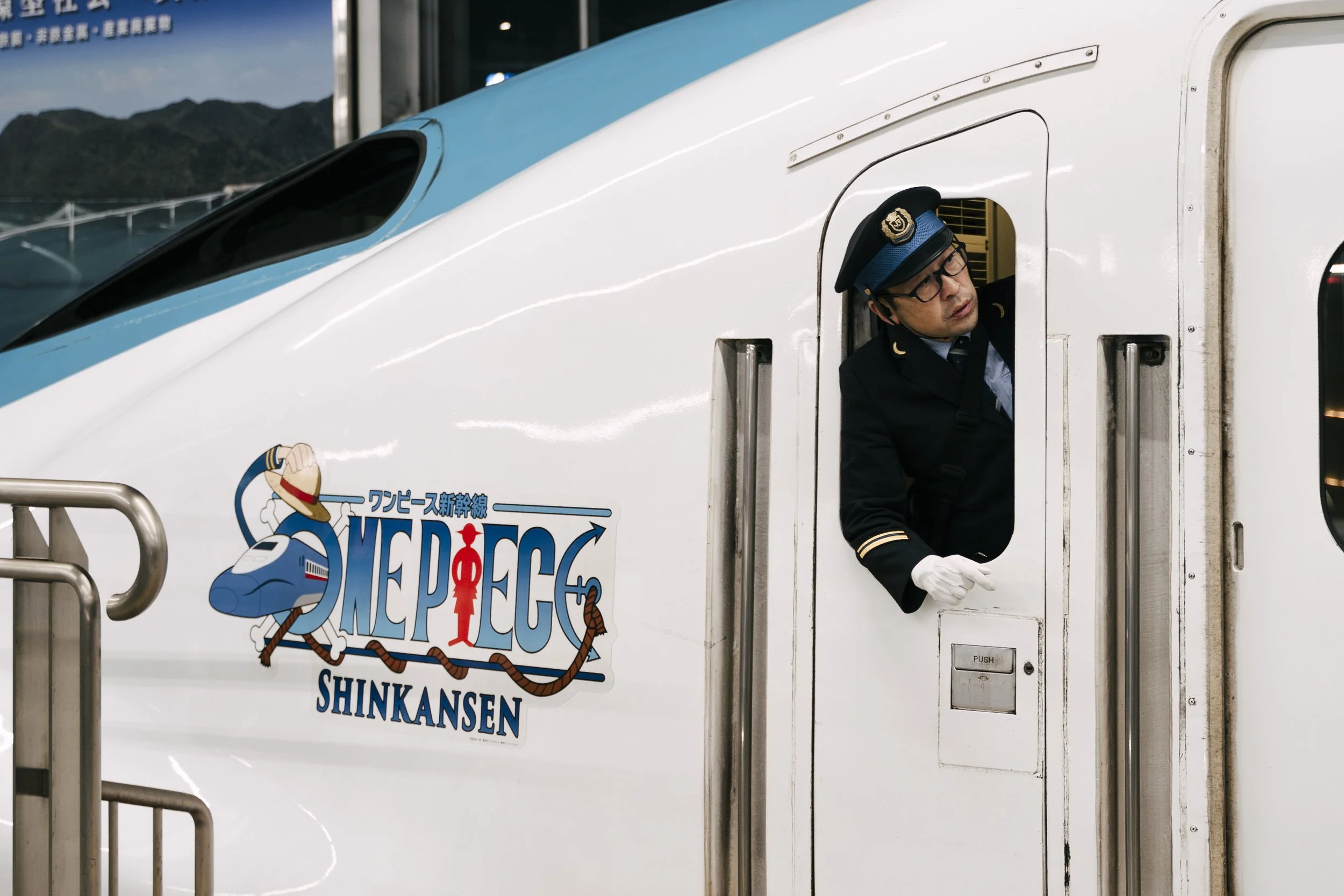
No other country treats its railways the way Japan does — with a precision that borders on ceremony, a reliability that has become a national identity, and a diversity of rail experience that spans the full spectrum from the extraordinary to the quietly mundane. The Shinkansen bullet train arrives to the second. The rural local line runs twice a day and has done so for decades. Both are taken equally seriously. That consistency, applied across an entire network, is what makes Japan's railway culture unlike anything else on earth.
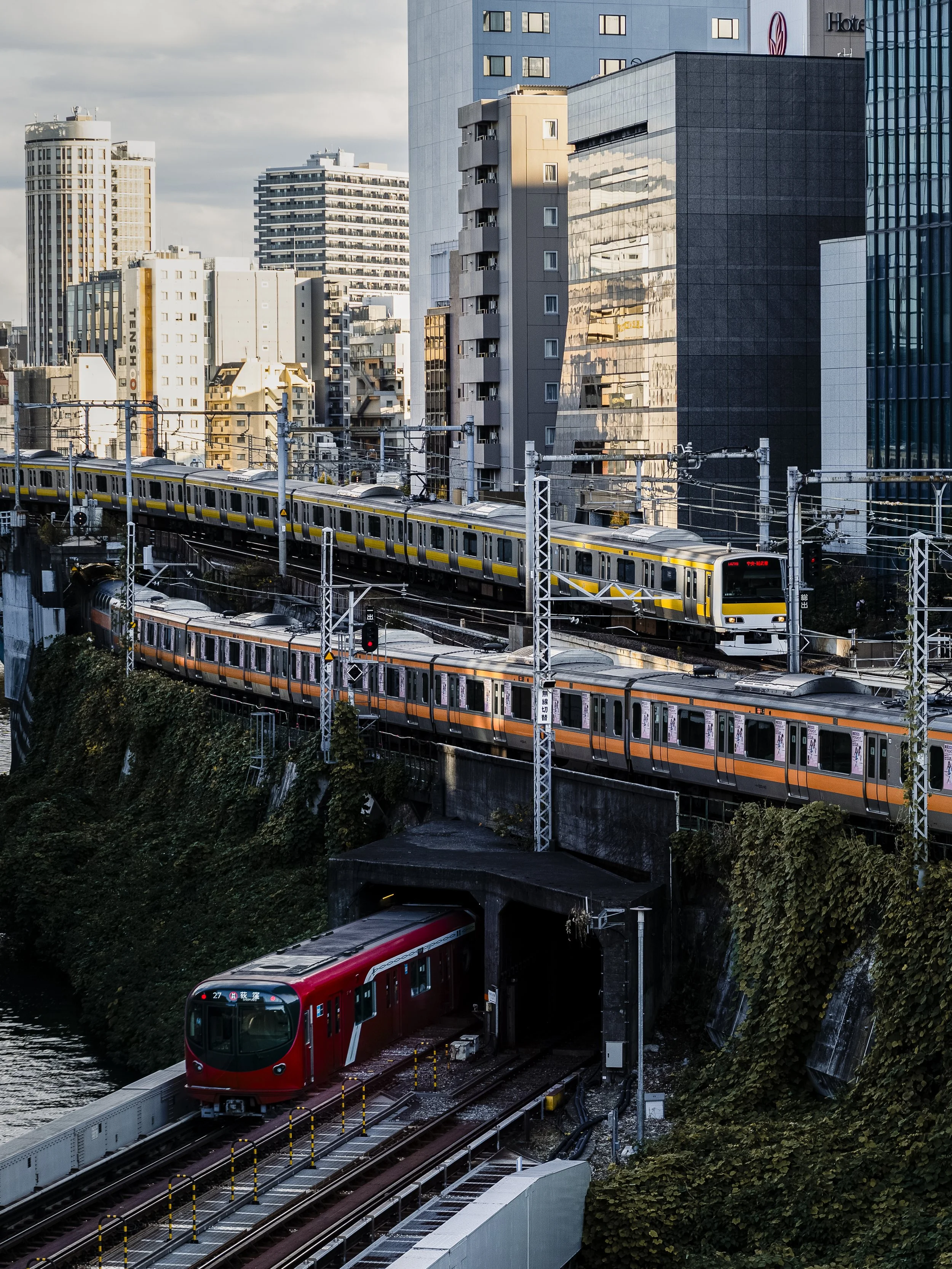
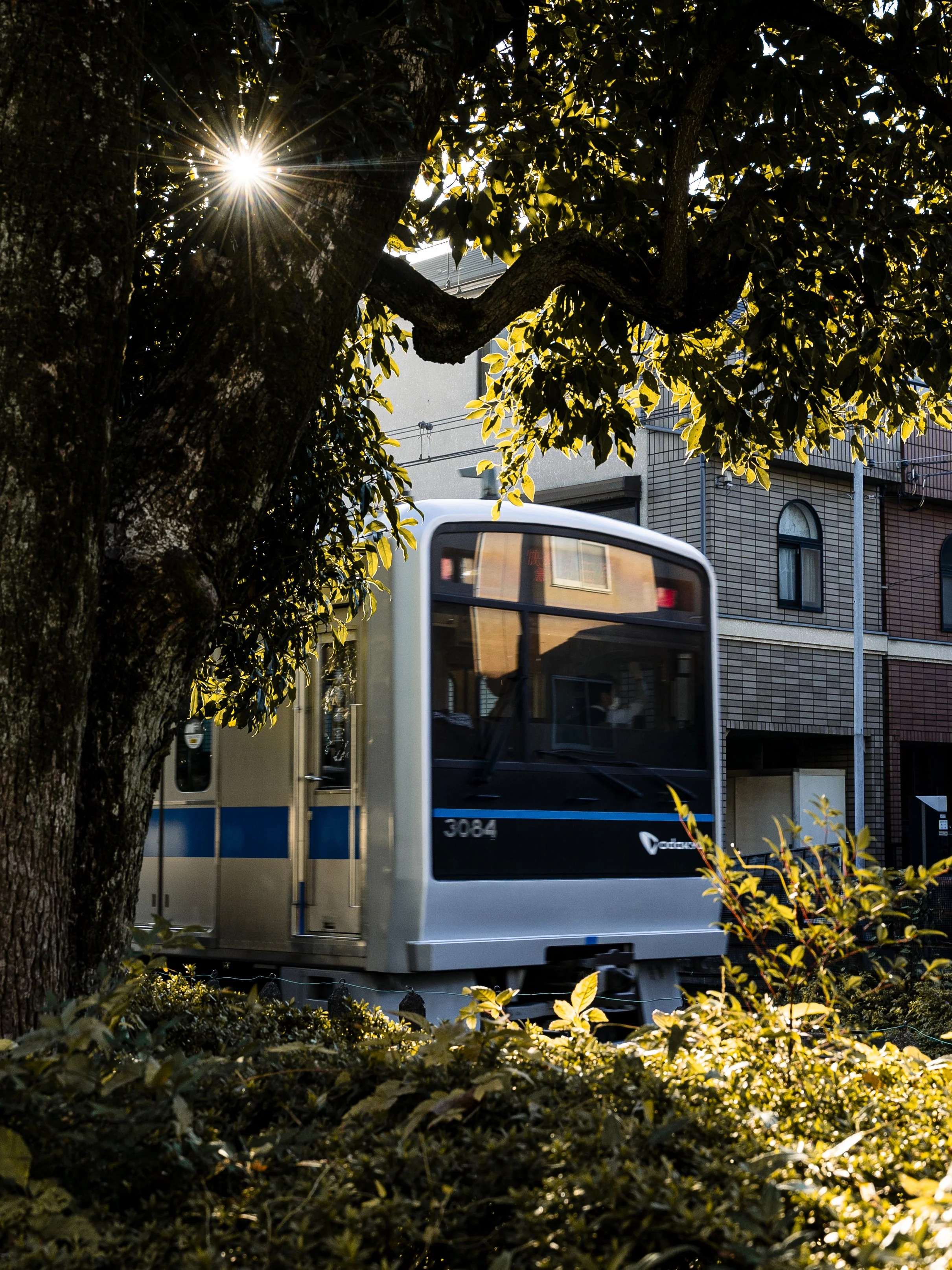
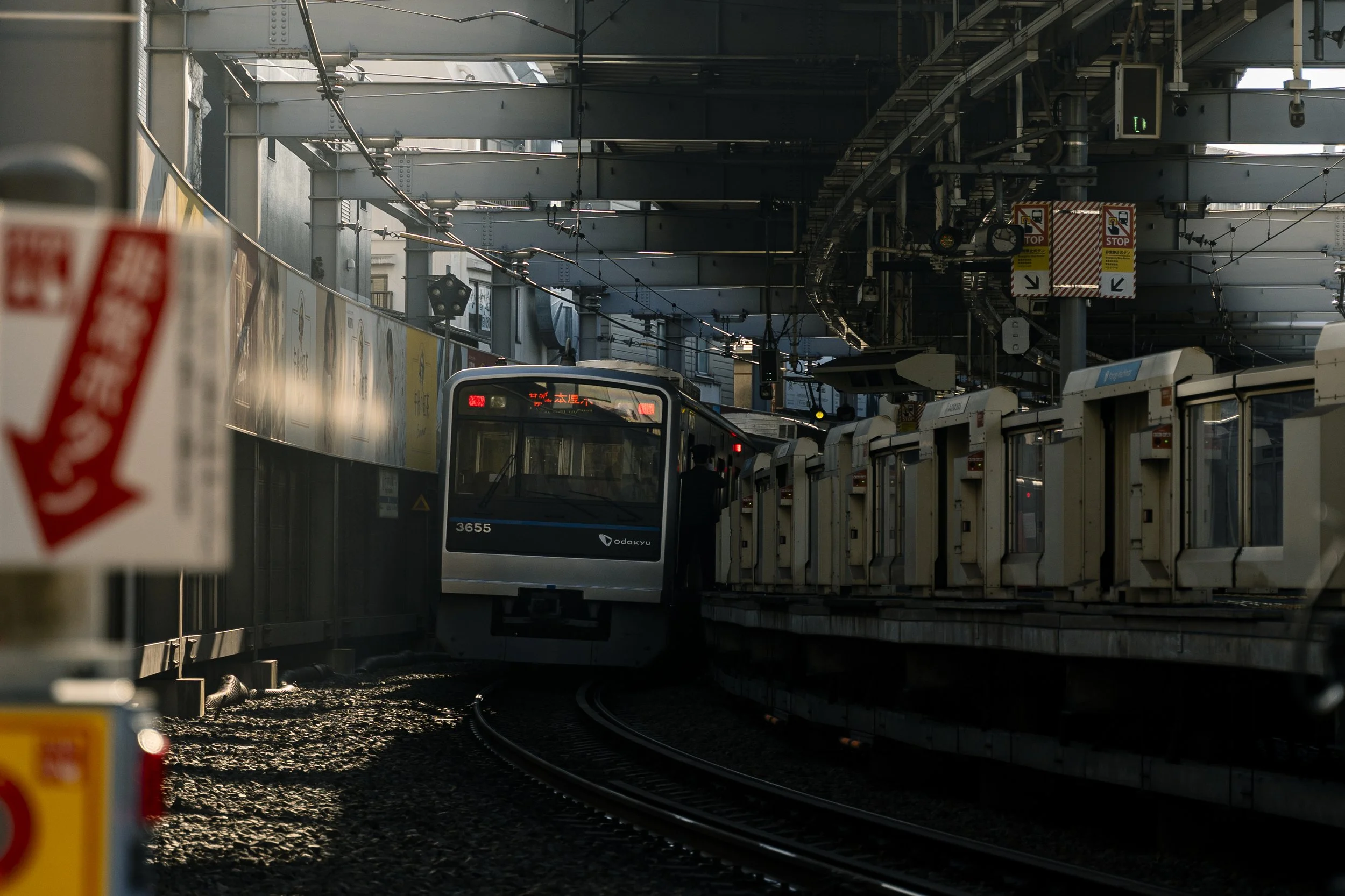
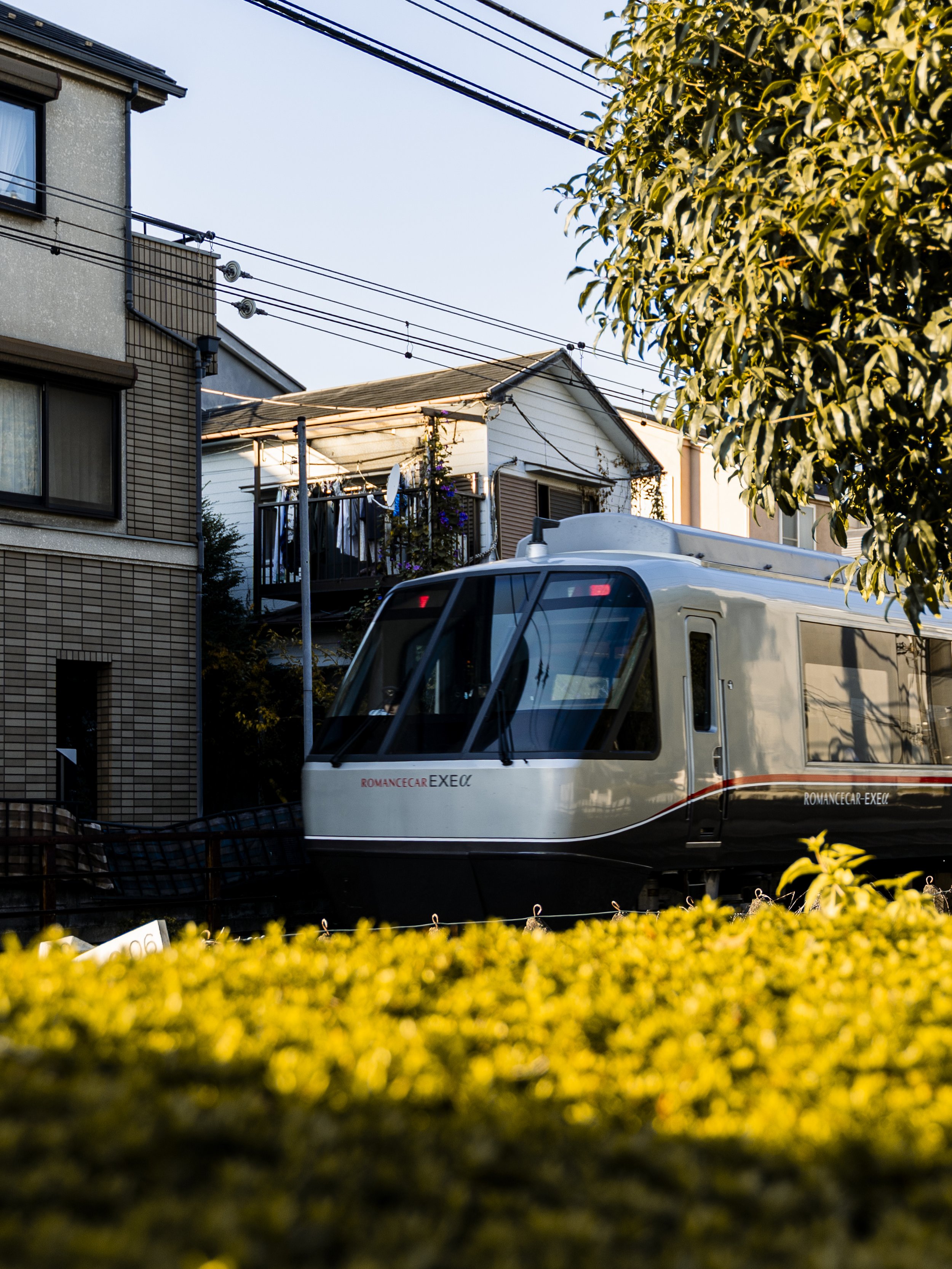
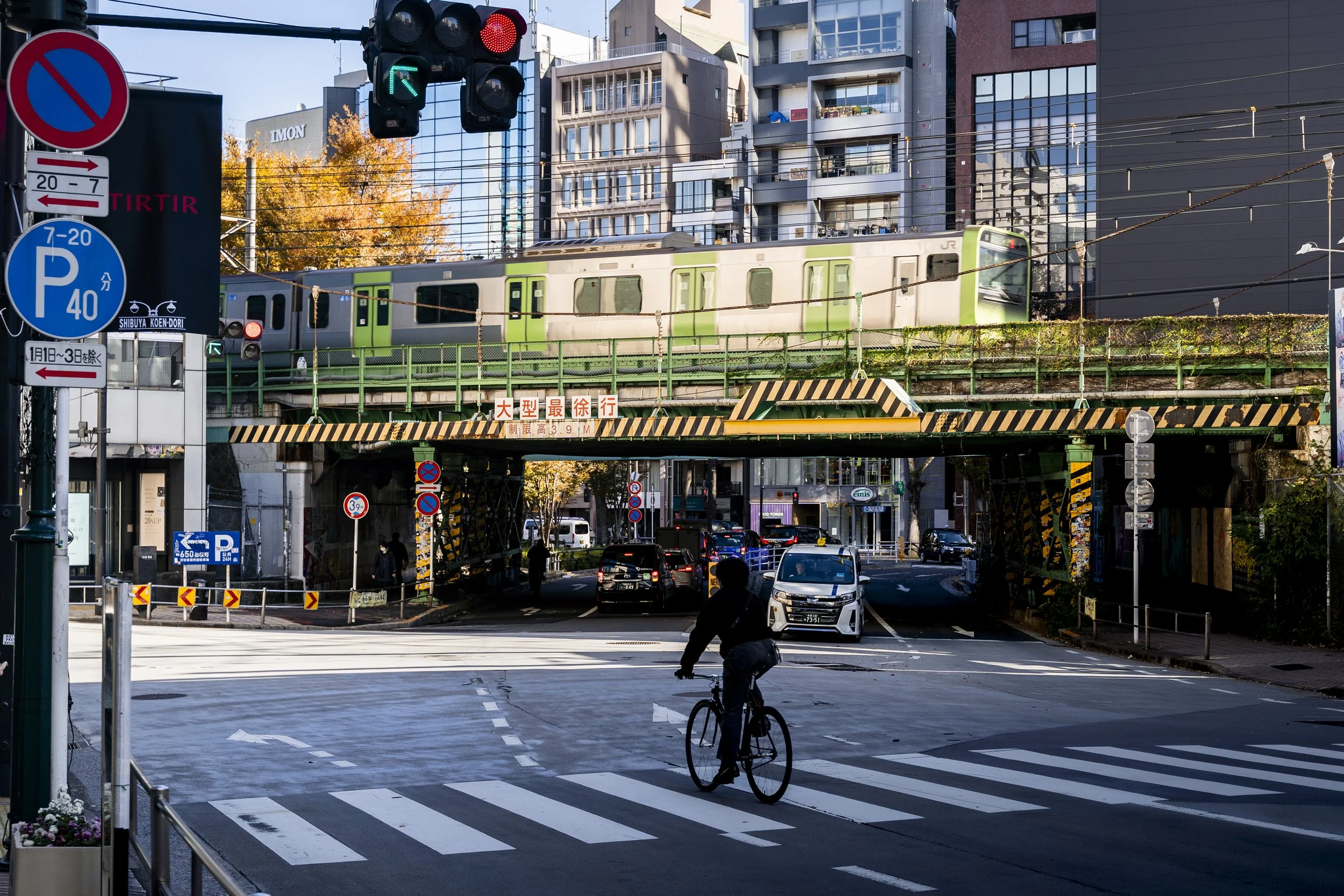
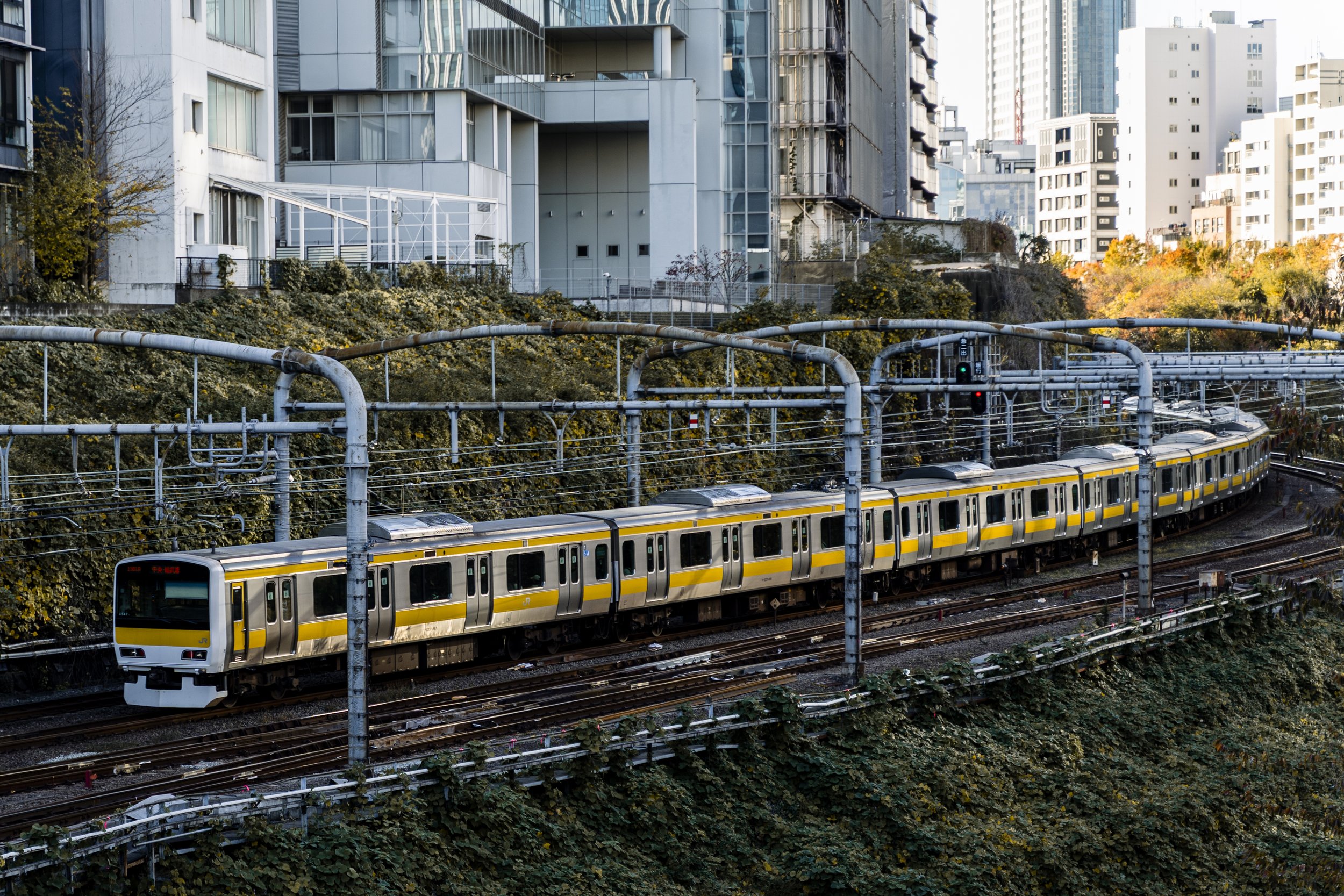
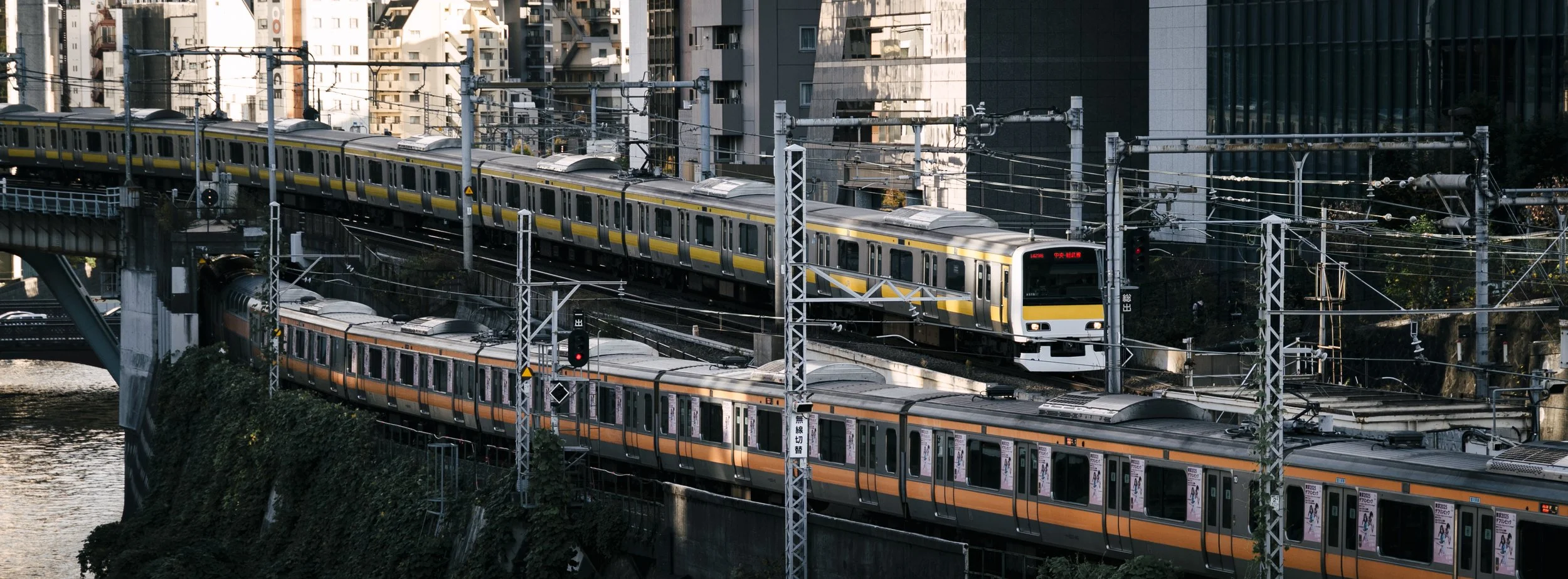
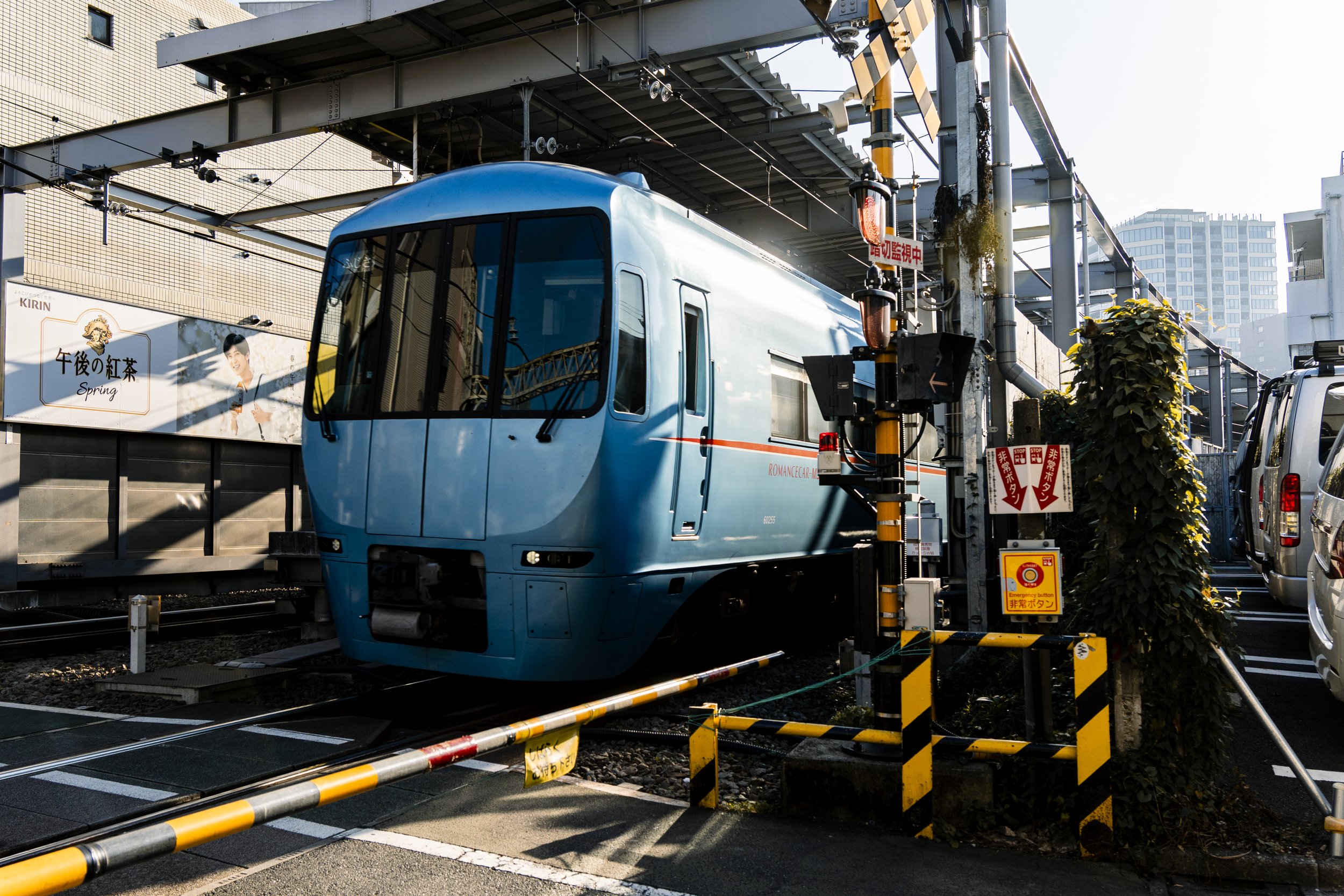
This series was photographed across Tokyo and Kyoto — two cities where the train is not merely transportation, but the connective tissue of daily life. In Tokyo, the rail network is the city's nervous system: layered, colour-coded, relentless. Lines cross above rivers, thread through residential neighbourhoods, curve through autumn foliage and steel cuttings with equal indifference. The Yamanote loop carries its passengers in an endless circle around the city's core. The Odakyu Romancecar — a luxury limited express — squeezes past level crossings in ordinary suburban streets, extraordinary and unremarkable at the same time.
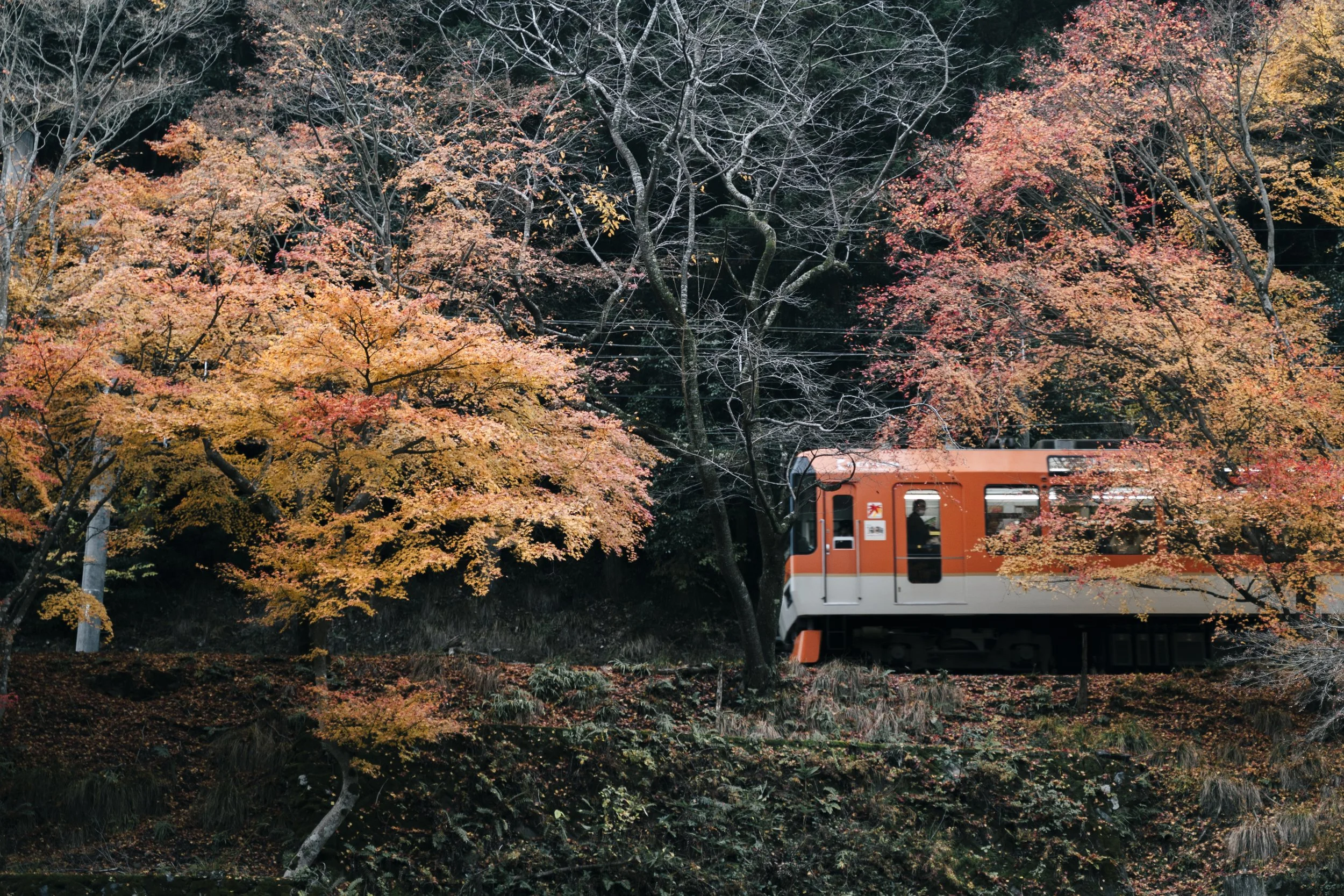
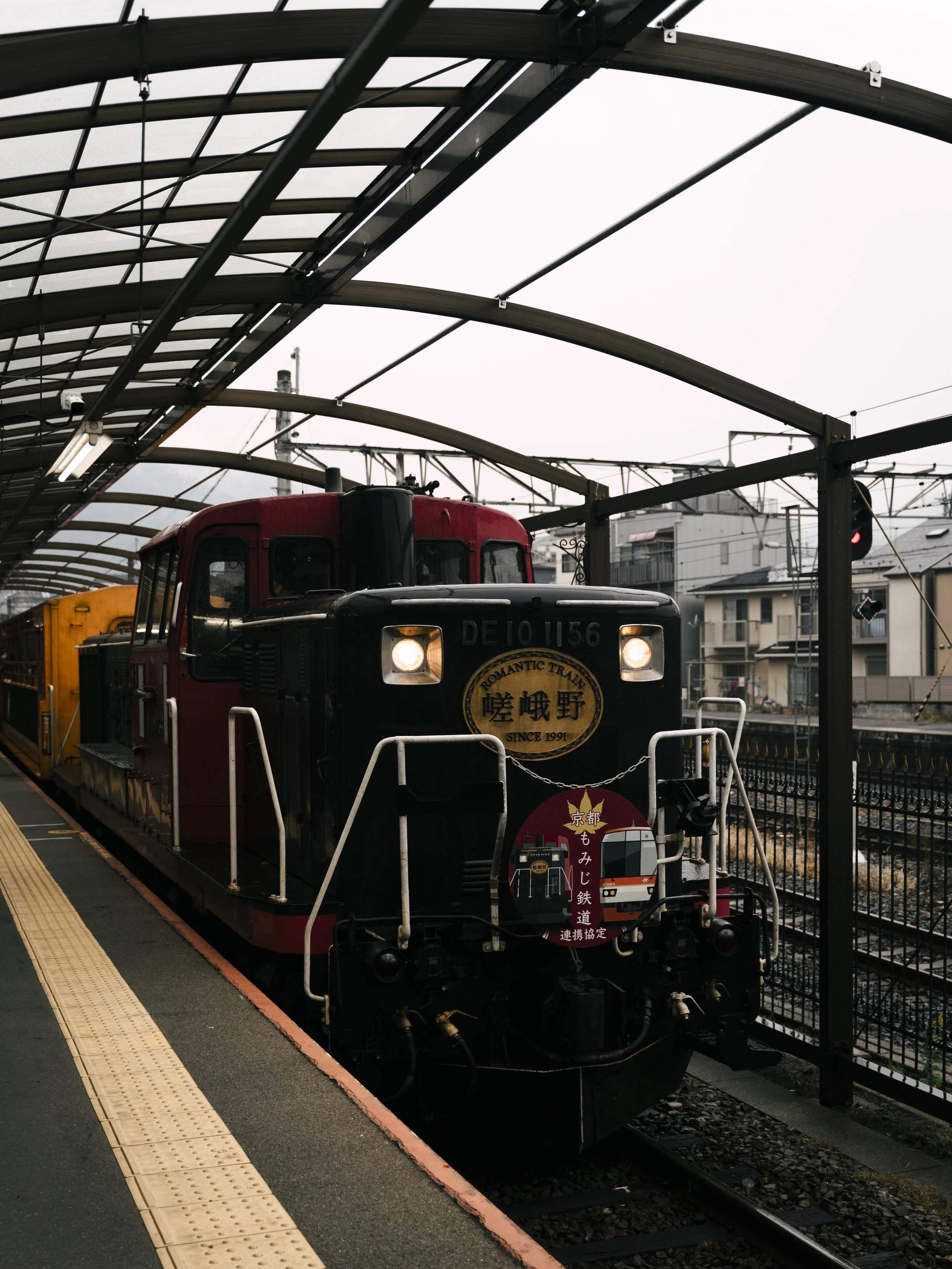
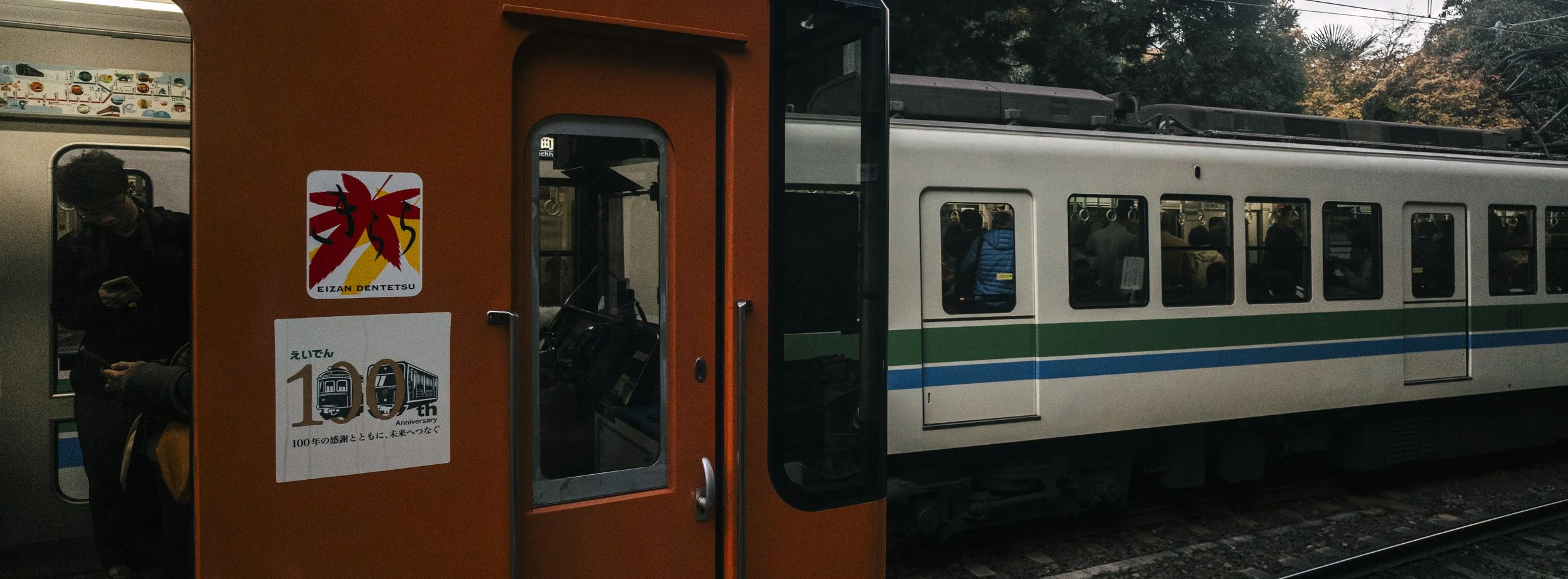
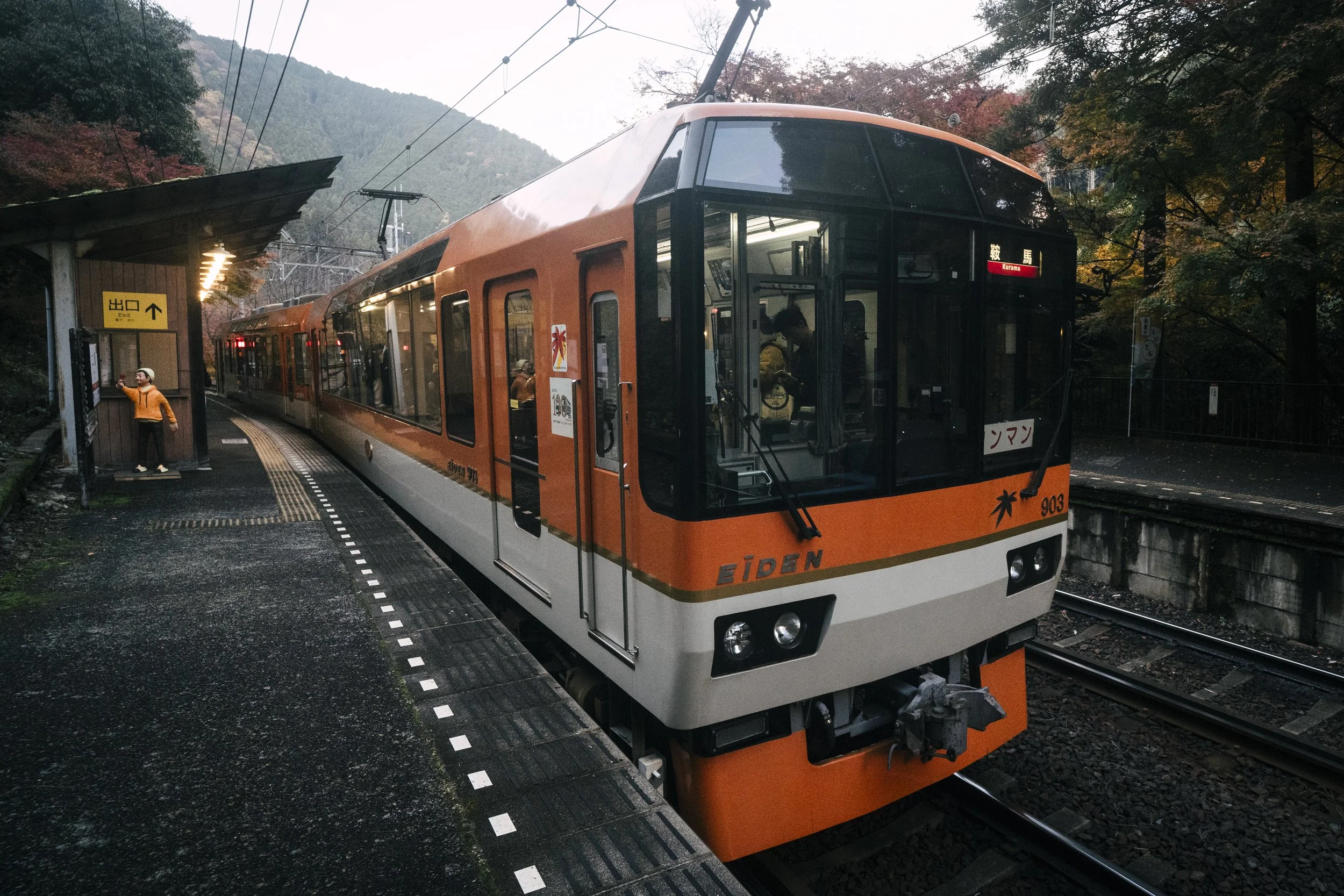
In Kyoto, the pace shifts. The Eizan Dentetsu's Kurama Line pushes through tunnels of autumn maple at dusk, headlights glowing against the fading light, fallen leaves carpeting the track bed. The Sagano Romantic Train — diesel-powered, unhurried — follows the Hozugawa gorge on a journey where the destination is secondary to the ride itself. These are railways that understand what it means to slow down without losing purpose.
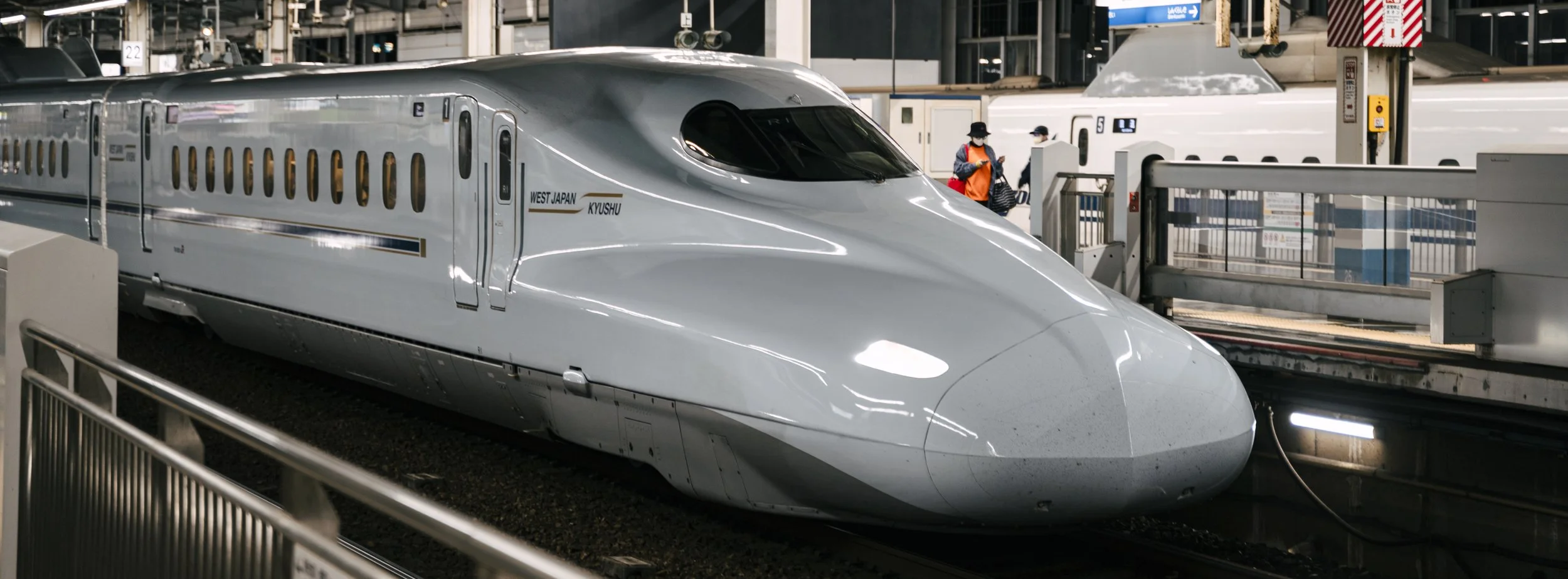
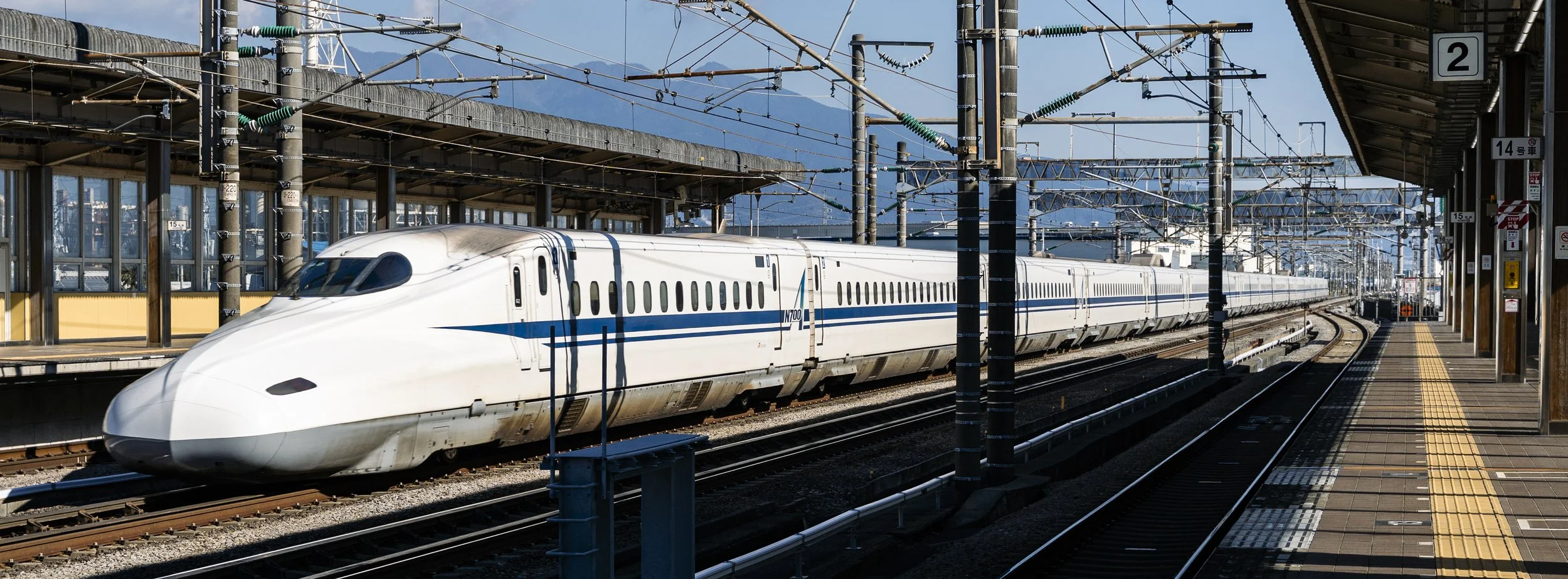
What draws the camera, again and again, is the tension between the extraordinary and the everyday. The E5 Hayabusa Shinkansen — one of the fastest passenger trains on earth — sits at the platform while commuters file past without a second glance. Three trains in three colours cross simultaneously above the Kanda River at Ochanomizu, the city stacked behind them in layers. A lone cyclist waits at a crossing as the Yamanote Line passes overhead, ginkgo trees burning gold against the viaduct. These are not staged moments. They are simply what Japan looks like when you pay attention.
This series is for those who understand that the train itself is never just the train. It is the platform, the timetable, the season, the city it moves through, and the people who share the carriage without ever exchanging a word. Japan has turned all of that into something close to perfection — and this collection is an attempt to hold some small part of it still.
Photographed in parts Japan, by Syazni Aizat. (2025)